No products in the cart.


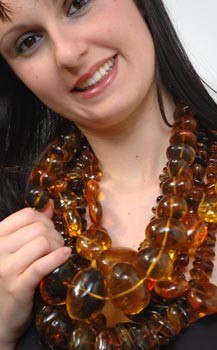
The “Big Thrills” *) can not be told. The experience of the enjoyment of a work of art, be it natural or mediated by man is, and must be, a personal experience. An entire library of art criticism is not worth the charm of a starry night, an inspired poem, a beautiful picture, a pebble amber. The jewels, those who have behind a true story, should be worn. The pleasure, the thrill of feeling on edge an amber necklace, or wear, just above your soft breasts, a pendant that tells a tough story of millions of years ago … well, you can not tell; It should be lived.
ne of our determination is that the stones should be absolutely natural. So, if one of our amber falls to the ground, it is very likely to break, while there are many ambers bouncing more healthy and beautiful as before. As that was not enough, our frail amber cost more than the others! There must be a reason. We recommend that the rings amber are treated with much awareness. Pendants and necklaces have, of course, fewer problems.


A fantastic feature of amber is its lightness. You can then wear very showy necklaces, unthinkable with other materials (which would weigh more than three times as much!) Amber is one of the first stone (even if it is not properly a stone) used as a jewel in the history of mankind, although, geologically speaking, quite young (something between 15 and 60 million years, a trifle compared at the age of diamonds and rubies).
*) A. K. Coomaraswamy – “The Big Thrill” – A masterpiece of art criticism of the greatest ever written.